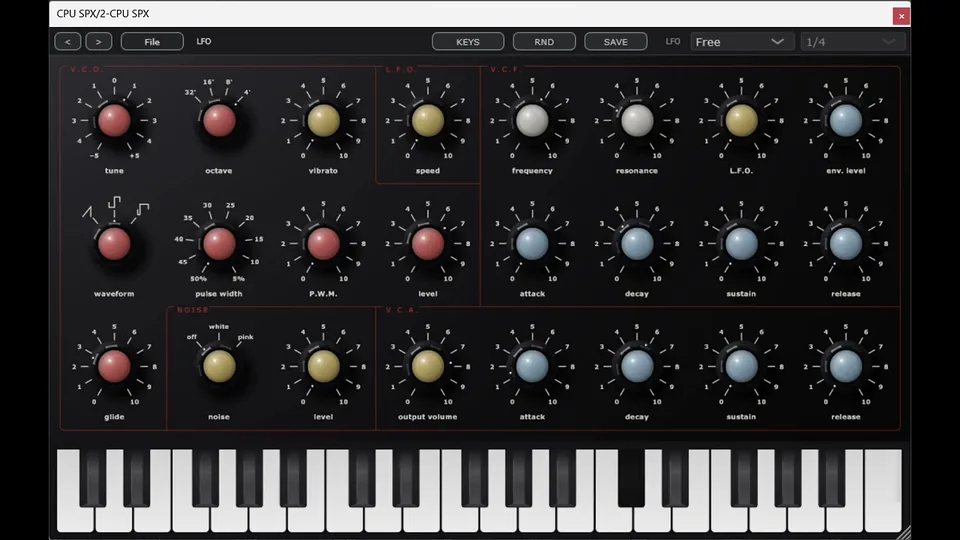
CPU SPX
Unleash your Frequencies.
An emulation of the JEN SX-1000 - a late-1970s Italian monosynth built to a price, and one that ended up on a great many records because of it. Being affordable was the whole idea, and the parts JEN could build it from led them to solutions nobody else was using.
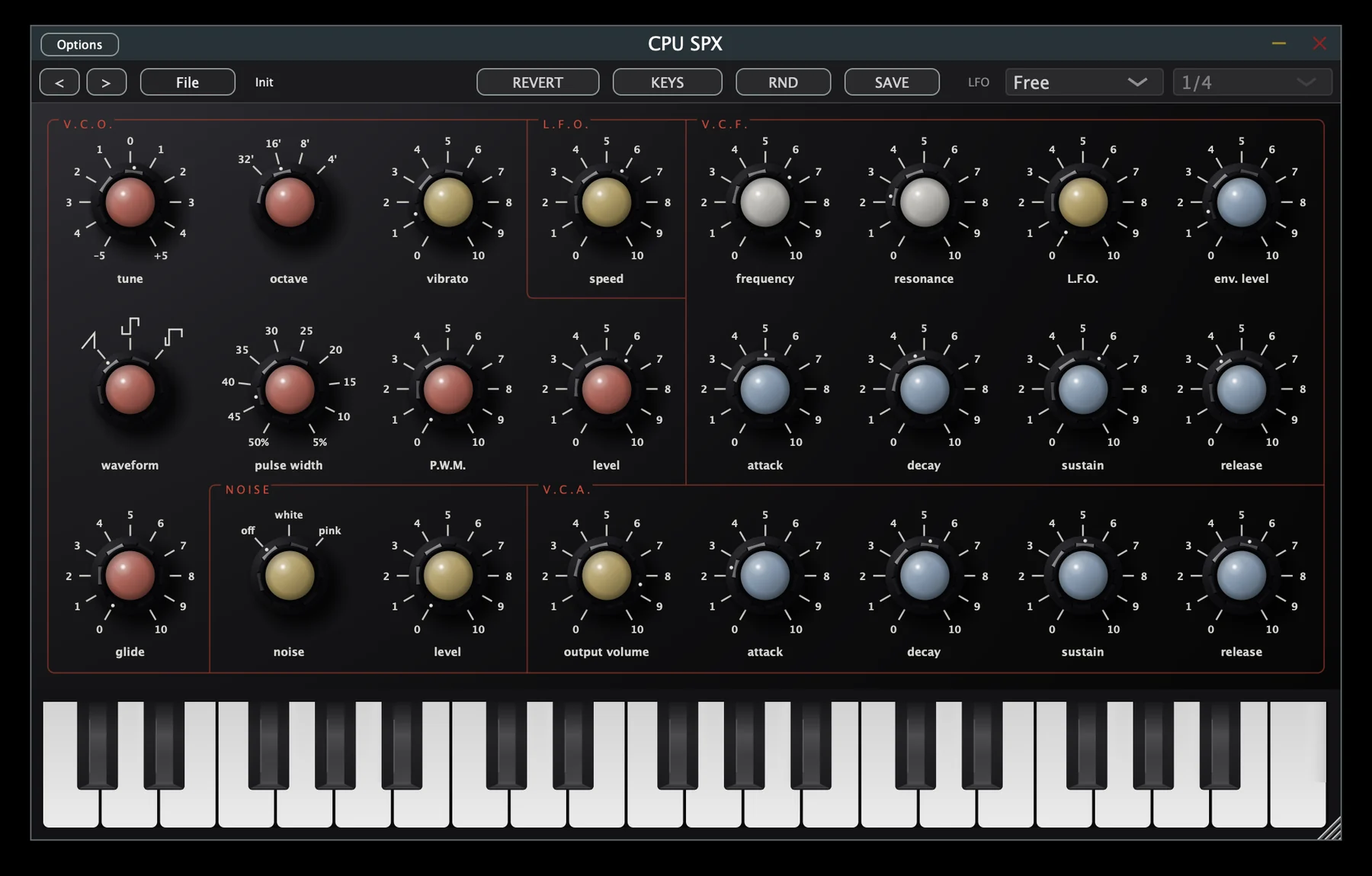
- Architecture
- Divide-down Every note divided down from one master clock.
- Filter
- 4-pole, 24 dB/oct An LM13600 lowpass that takes off on its own if you push it.
- Platform
- macOS · Windows · Linux VST3, AU and standalone on macOS, Apple Silicon and Intel. VST3 and standalone on Windows. VST3 and LV2 on Linux. A PDF manual is included.
- Availability
- Buy now - £39.99 + VAT
Hear it
Two short demos, about thirty seconds each. Both recreate sounds LFO made on an SX-1000: the lead from their own LFO, off Frequencies, and the bleeps from their remix of Nightmares On Wax's Aftermath.
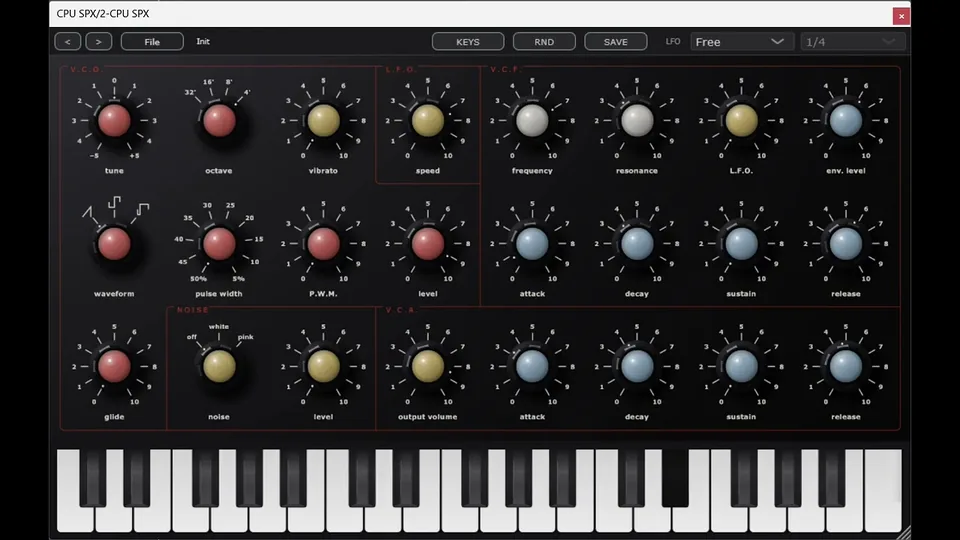
Sounds very close to the early LFO sounds if not identical.
Where the sound comes from
On most synths, the key you press sets an oscillator's pitch directly. The SX-1000 works differently: one master clock runs all the time, a divider chip turns it into every note, and the key picks which one you hear.
You can hear that decision. The keyboard drifts as a single living thing: it can wander against the rest of a track, but never against itself. Vibrato moves everything at once. Glide travels between notes at a steady rate, rather than rushing off and easing in.
It is the organ's way of making pitch, rare in a monosynth, and it gives the instrument a character that costlier synths of the era never had. CPU SPX is built from the circuit rather than sampled from the instrument, so it behaves that way here too.
Modern extras, authentic by default
Factory presets and user presets you can organise into banks - the SX-1000 had no patch memory at all. An on-screen keyboard, so you can play it without plugging anything in. A randomiser that makes usable sounds rather than noise. An LFO that locks to your track's tempo if you want it to. And software copies of the internal factory trimmers, for anyone who owns a real SX-1000 and wants to match the plugin to theirs after forty-five years of drift.
All of it sits on a separate strip above the modelled panel, so the authentic behaviour is always what you get by default.
Registration. No copy protection, and nothing
is gated behind it - the plugin is fully functional the moment you install it,
offline included. A purchase includes a registration code: entering it needs
an internet connection for that one moment, to check the key and show the
plugin as registered to you - after that it never checks again, ever. Skip
that step and nothing changes: every feature still works, with no trial
period and nothing held back.
Not a JEN product. JEN and SX-1000 are used descriptively
to identify the instrument this emulates. Central Processing Unit is not affiliated with,
endorsed by, or sponsored by the original manufacturer.
Support and enquiries: input (at) cpurecords.net